My artistic research focuses on giving sound a body, exploring its physicality in space and the way it moves through us. I seek to make this invisible material perceptible, to give it a form, a presence and a physical existence. Sound touches our skin, resonates within our flesh, is absorbed and circulates through us: it becomes a living, elusive yet deeply intimate material. What interests me about sound is its ability to inhabit us while unfolding around us. It is both an intimate and a collective material: intimate because it acts directly upon our bodies and our inner perception; collective because it circulates between beings, moves through spaces and connects us to the environments that surround us.
I began my artistic practice with sculpture, but gradually felt limited by the physical constraints of the material. Discovering sound opened up a new field of research: that of an immaterial material that propagates, moves through bodies and architectures while producing real physical effects. Sound possesses a particular force: it escapes the gaze yet acts directly upon our perception and our presence in the world. It allows me to explore another way of apprehending materiality, no longer only through what is visible, but through what is felt.
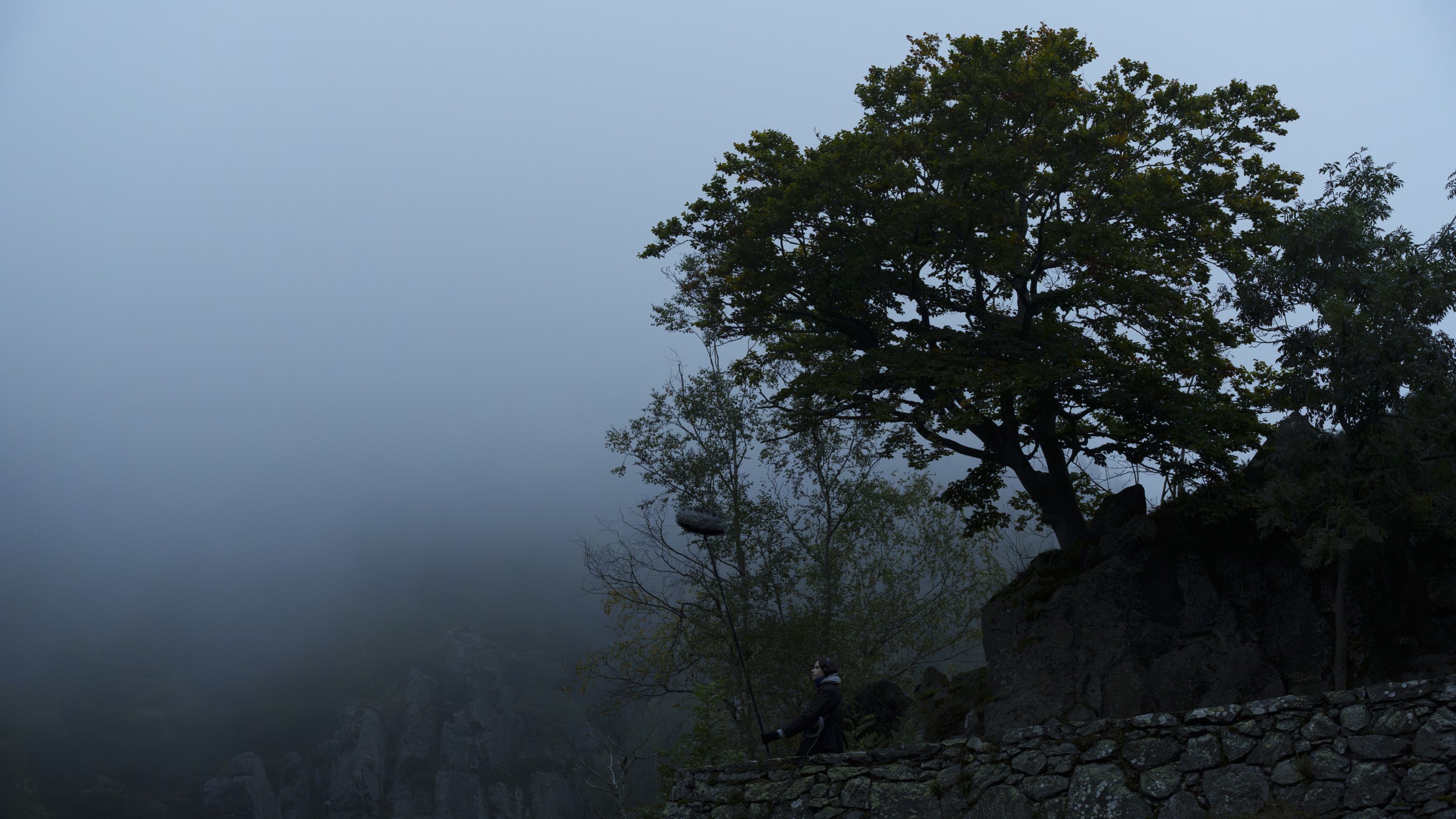
Sound recording is a way of entering into a relationship with the world. Recording a sound involves moving through a place, paying attention to the sites, materials and phenomena that surround us. I have to walk through a territory, walk, wander and experience its presence, its current state, but also the traces of its history. Sound then becomes a sensitive memory of an environment, revealing invisible relationships between beings, spaces and materials. This attentive listening to the world is essential to my practice: it is not simply a matter of capturing a sound, but of creating a relationship with a place and with everything that composes it.
I conceive my sound installations as sculpture-architectures, spaces to move through and inhabit. Sound becomes a material that creates relationships between the body and space. Through my works, I seek to question traditional forms of sound diffusion and explore new ways of containing sound, transforming it and giving it a body. The installation becomes a space where sound, light and material meet to construct an immersive experience. Sound is no longer simply something we listen to: it becomes an environment we move through, a presence with which the body enters into relation.
The body occupies a central place in this research. When listening to a sound, our body does not simply hear it: it absorbs it, feels it and resonates with it. Vibrations can be perceived in the skin, in the flesh and all the way to the bones. I therefore seek to create experiences in which listening becomes a physical and sensory experience, where the viewer becomes aware of their own presence in space while being invited to enter into a relationship with a larger environment. Sound creates a link between inside and outside, between the intimate perception of the body and the world that surrounds it.
The living world runs through my entire practice. It is not simply a subject or a formal source of inspiration, but a way of thinking about forms, relationships and transformations. My relationship with the living world was shaped from childhood by the environment in which I grew up, particularly through my father, a beekeeper and lumberjack, who passed on to me a particular attentiveness to natural cycles, balances and the fragility of the world around us. The living world possesses forces that exceed us, but it also reveals a great vulnerability. This tension between power and fragility nourishes my research, particularly in relation to contemporary ecological issues. I am interested in organisms as systems in perpetual transformation, shaped by exchanges, circulations and precarious balances.
Time is also an essential material in my work. My installations are constructed like living organisms or transforming scores, in which sound, light and material are continually evolving. I seek to create spaces that are never entirely fixed, but that breathe, transform and gradually reveal their different dimensions. This approach allows me to explore how an environment can become a living form, crossed by tensions, movements and metamorphoses.
Light occupies an essential place in my installations as a material in its own right. It reveals, emphasises and makes visible transparencies, materials and forms. It accompanies the transformations of sound while possessing its own power: it can be soft or radiant, but can also become unsettling, blinding, or plunge us into darkness. Its interaction with sound makes it possible to create spaces where different mediums transform one another, where what is heard becomes visible and where what is visible influences the way we listen.
Through this research, I seek to create sensitive and living spaces in which sound is no longer simply something to listen to, but a material that can be felt, moved through and inhabited. My work explores the relationships between bodies, spaces and environments, seeking to make perceptible the invisible vibrations that connect us to the world.
Contact: lebleuxlise@gmail.com.
Portfolio available here in pdf.